Thursday, August 15, 2013

Horizontal Roots

We have a few nice size flower beds around our home. The gentleman who completely restored this 1920's home had the foresight to not only put in these nice flower beds but he also put down a weed-barrier. This black sheet of material is rolled out onto the surface and then covered with top-soil. The plants you choose to grow are planted within a circle you cut in the barrier, allowing their roots to grow deeply. However, when weeds grow, their roots are restricted from growing down by this barrier. This makes the puling of the weeds extremely easy. The weeds roots cannot "Take-Root" and no matter the number or variety of weeds, the pulling is a piece-of-cake.

Roots matter. The foundation you possess is a fine example of your roots. The root foundation is comprised of the people who influenced you, the books you have read and the things you have learned by experience. Adequate root structures require a fertile environment and that means you have to be willing to learn and grow at every opportunity, especially when you make mistakes. The taller you grow in your endeavor the deeper your roots need to grow. When the growth is too rapid and disproportionately vertically focused the roots do not have adequate time to grow deeply, the top-heavy result is unstable. You look really good growing so high so fast but when a challenge comes you do not have a sufficient root structure to be able to overcome the negative forces.

Growth is desirable but the right kind of growth at the right pace is the kind that will develop a deep root system that will sustain your personal and professional experiences for a lifetime. Grow deeply as well as tall.

Wednesday, July 31, 2013

Waiting On The Thunder

My hometown in southeast Texas had a number of freshwater canals and ponds. Just behind the home I grew up in is a large field that, as inquisitive and gullible youngsters we used to explore. It happens to also be the location of The Spindletop oil field, where a world-changing deposit of oil was discovered on January 10, 1901. This field had a huge fresh water canal and a massive storm sewer we affectionately named; "The Cement Ditch"in addition to several ponds of varying sizes and depths. These canals, storm sewers and ponds were excellent habitats for; Macrochelys Temminckii, more commonly referred to as; The Alligator Snapping Turtle. One of these creatures, according to The United States Geological Survey, reached an incredible 250 pounds! These are intimidating and formidable creatures who possess extremely powerful jaw strength. The local legend we lived with (because our parents said so) held that if one of these fearsome creatures were able to snap down on you, they would not let go until it thundered. We were terrified and therefore we avoided these guys at all costs, especially on cloudy days.

There are a lot of people who hold on to something, or allow something to hold on to them, far too long and as a result they are continually burdened by the additional emotional weight. Things such as: when they were treated harshly by someone close, when they were unjustly targeted at the workplace, when they were treated as an outcast, the times they were picked on by their peers, jilted and many more instances that were beyond control. Then there is the emotional baggage holding on that is entirely the result of the individual being held on to. The list may look similar to the things already mentioned. The damage is considerable independent of the initiation.

Let it go or make it let go of you. The alligator snapping turtle does not need a clap of thunder in order to let go. What the turtle needs is enough of the focused energies sufficient to inform the turtle that holding on is a really bad idea. Anyone can let go or make something let go of them by making a decision and moving on. You don't need to wait any longer.


Wednesday, July 24, 2013

When it is Okay to Talk About UFO's

There really is a time and place for everything. The things we talk about are important to us and ideally to those folks around us. We continually communicate verbally and in doing so we must be judicious as to the subjects we discuss and the words we use, especially in a professional setting.

There are subjects we discuss that are relevant, important and meaningful in our professional walk that enrich our experience and hopefully the experience of those we engage with. Discussions that enlighten, inform and direct. These are the good words.

Choosing wisely, what we say in any setting, figuratively speaks, to the thought we have put behind our statements. The flip-side is that some folks  engage their mouth long before they engage their intellect. When you are in a professional setting your discussions should be largely about the tasks at hand. Sharing personal experiences, events, attitudes and opinions in a professional setting is going to happen. The problem arises when that is ALL someone continually offers and therefore the perception is that this individual spends greater energies with personal things that are not helping move the collective-professional-process forward. Then, they become a distraction and may lead the entire team off a cliff. This manifestation of a distraction is one that is often challenging to overlook and will likely lead to an uncomfortable event when eventually someone gets fed-up and takes the "distraction" to task.

So, after work, when you are with people you trust feel free to share your experience with little green men from Mars. But don' t be disappointed if they look at you funny and strongly encourage you to keep the Encounter of the Third Kind to yourself.

Friday, June 14, 2013

Enough is Enough

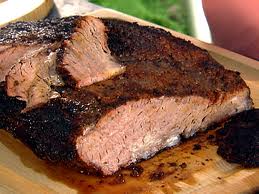
There is a world renown restaurant that cooks some of the best barbecue in a state that is known for great barbecue. Day in and day out this eatery serves hundreds of folks. Many of these folks are from far away places. They drive many miles to enjoy the food and the ambiance.

This restaurant has a great and very successful business model for, doing enough, to serve their patrons without doing too much. You see, this restaurant cooks a limited amount of barbecue on a daily basis. They open the doors at the same time every day and close the doors whenever they run out of barbecue! Some days they run out just after lunch and some days it takes a bit longer. They always run out before dinner time, but they always sell-out! This business has a fantastic brand and they protect it by doing enough for their customers but they do not clamor to do too much. They know the amount of business they can do, at a very high quality level,  on a consistent basis, so they build and plan their work around that manageable target.

There is a famous saying; "Don't bite off more than you can chew."

This is as true in life as it is in business. Far too often people get wrapped up in getting more and more, to the point of diminishing return. Some businesses are especially good at doing bad by
over-promising and under-delivering. They are so focused and geared on growing their business they literally run past the business they currently have and the business they can manage well. Enough is never enough.

You have no business getting bigger at anything that you cannot presently do so well, that the time it takes to achieve a high-quality desired outcome, is reduced because of your increased level of proficiency. "Enough" really is a finite place to be in business and it is a good place provided that you are not getting stagnant. This restaurant doesn't serve some good barbecue some of the time, it serves great barbecue all of the time. Growth is desired as long as it is not at the expense of quality.

Wednesday, June 5, 2013

Throw Up

The phone conversation began innocently enough. The caller had attracted my attention, minimally enough to lead to a computer aided presentation. We scheduled the web-based meeting and the call came in and I noted that it was just a few minutes late. Without any small talk, the presenter started delivering and after approximately one hour, they asked me how I felt about their services. Literally the presenter talked (seemingly without taking a breath) for over an hour, rattling off opportunity after opportunity. They threw up and the contents of the ranting came rather forcefully out of the phone and filled my office. A few of the 100,000 points they made during the never ending presentation did peak my interest and encompass some things that may hold potential for our company. However they still do not realize that since they never ask. The conversation was not a conversation at all, it was a auctioneer-paced dump of information the presenter had already labeled as important to me, as if I was just like everyone else. Even if I am like everyone else, I don't want to be treated that way.

Conversations are meant to be two way streets. When having a conversation make sure to include the other person by asking their thoughts as the conversation progresses. When you ask a question, remain silent and give the person the opportunity to think and respond. Don't interrupt as challenging as it may be to hold your tongue. Your goal is to team up, not throw up.

Friday, May 24, 2013

Watching, Always Watching

One fine day, a while back, I picked my six year old daughter from elementary school. She had no
sooner settled down into the passenger's seat, while buckling her seat belt, she looked at me and said; "You got a new key." In fact, I did have new key, but what made her observation so profound is that it was not an especially unique key. The new key looked just like most of the other keys on my keychain, of which there were at least eight.

The impact of my daughter's observation and calling-out of a very small detail had a lasting impact upon me. She noticed the really small things suggesting that she was all over the not-so-small things that I was doing. She was watching everything I did and I don't think she was especially unique in her behavior. Based upon that one event, my logical assumption was that other people I was around were also watching-EVERYTHING.

The hustle and bustle of life or conversely the doldrums of life can cause us to be so involved or uninvolved, to the extent, that we do not notice others observing and based upon their observations making judgements about us or learning from us. If we are busy and accomplishing things with a great attitude those around us will likely learn that they too can do the same. If we are slacking in our efforts and we have a bad attitude those watching us may feel that since we are behaving badly, without consequence, they too can behave badly without consequence. The behaviors, good and bad, may not be addressed by the folks we are working with, but they will have an impact on us internally, even though the impact may not be readily apparent. When you are engaged in doing good things, and doing them very well, there is something inside you that grows. When you don't do things well, the growth stops or retracts. Someone is always watching you, even if that someone is you.

Wednesday, May 1, 2013

The Most Important Opportunity


An astronomical water bill took me to city hall to inquire. The charge, for two consecutive months was off the chart. There is, of course, a window between me and the city employee and apparently that gives them a license to assume that I and practically everyone else that comes to the window, is well below average intelligence. Without the window as a barrier, they might need to prove that they care and respect the customers by, let's say, acting like we actually mattered and that we just might have a brain. The discussion of the huge charge for water lead to a rather lengthy and confusing explanation of the process of charging based on averages, etc. The lasting impression is that they really don't care because they don't have to. Where else can I go to get my water? They are not held accountable for treating the window-visitors as if: They represent the Most Important Opportunity. Because of the distressing issue I was having, the city employee could have started the monotonous detailed (I have done this a thousand times) explanation with; "I am sorry you are having a problem, let me see if I can help." But Noooooooooooooo. I got the standard "throw-up" and get away from the window as quickly as you can demeanor.

Whenever you are engaging with anyone in business you are given the opportunity to treat the individual(s) as: The Most Important Opportunity. Every individual thinks that their problem or situation is much more important that almost anything you have going on and they expect you to behave accordingly. They represent a chance for you to grow by taking ownership, learning what they need and then do what you can. The Most Important Opportunity of the day is often the one standing before you at any given time.