Tuesday, January 21, 2014

Irritating


Pearls are the result of an oyster overcoming an irritation. A piece of foreign matter is somehow introduced to the inside of the shell where it begins irritating the oyster and until the oyster takes action, the irritation continues. The oyster begins the slow continuous process of covering the irritant with nacre, which is the substance that covers the inside of the oyster shell. Over time and with consistent effort, the oyster turns the irritant into a pearl. As the oyster grows the pearl grows. The oyster would surely expel the irritant if it were able, but since it cannot it is forced to make the best of the irritating situation or go oyster-crazy. Some of the most beautiful and elegant jewelry ever made consist of pearls, which began their existence as an irritant.

The same can be said about some people and situations in personal and professional life. They are irritating. The irritation typically begins as a rather small matter but often grows into a monster of an issue because it goes ignored, often because of the desire to avoid confrontation. The value judgment starts to come into play because of the irritation and decisions are made that are intended to eliminate the irritation rather than round the irritating corners off and perhaps develop a pearl of an outcome.

There are going to be times when things and people that are beyond your control pop up and begin to irritate you. These are the opportunities to take an irritant and gradually smooth out the cutting surfaces and create a smooth pearl of an outcome. Consider irritants as opportunities, otherwise you may become one yourself.

Wednesday, January 15, 2014

Who Is Fooling Who

I remember when not everyone in college passed. I remember when there were fewer really good
grades than the other kind. I remember a time when you had to really push hard in college to make excellent grades and the accomplishments were really special, because there were fewer making A's than the other letter-grades that, by design, represented a lower level of accomplishment.

Today it just ain't so. A study conducted by professors, Stuart Rojstaczer and Christopher Healy, revealed that in 1960 the most common grade in college given nationwide was a C. In fact D's and F's accounted for more grades combined than A's which were given at a rate of 15%. Today the largest percentage of grades, across a wide range of schools, are A's, The reality is not real. 73% of all college grades are either A or B (43% are A's). Are we to assume that the students of today are really that much smarter than those of days past? Should we surmise that the college students of today are really buckling down, not wed to their smart phones and taking no academic prisoners? I don't think so.

What this says about higher learning on a massive scale is that these students are living in a bubble that someone designed. Who knows what the intention is but it will be painfully obvious what the results are once the veil of academia is lifted and the application of the knowledge acquired is necessary to thrive or just survive.

Once these coddled young adults get in the business world, a rude awakening likely awaits. Because these students were excelling in their previous protected environment according to the grades they were given, and watched in admiration and awe as the grass grew greener right under their studious feet, the new reality may be hard to accept. They will find that the business world is a bit more demanding. Out here if you don't really produce you really fail and nothing is going to stop that from happening except the focused efforts that produce at the required levels of expectations.

To they who are making really good grades because you earned them, stay the course because the disciplined behavioral foundations you are utilizing to make the grade now, will pay off later in your professional endeavors. There are many schools to choose from that do grade students well and fairly and they produce the type of prepared individual that will be in a position to make positive contributions.

Thursday, December 26, 2013

The New Year is Not New

There is really nothing new about the new year except for the number of the year. We jump or slide or crawl or run from one day to the next and suddenly, mysteriously, miraculously, wonderfully, or hazily we find ourselves in a NEW YEAR ready to do NEW things and change dramatically. The feeling is held by many that the new year will somehow bring new directions and motivations that were held in darkness for the past 12-months.  All we need do is simply endure and patiently wait for one more day, then a light will shine brightly on an opportunity and change our way of life that moves us to accomplish goals that were heretofore not within our grasp. Nothing could be farther from the reality of getting things done or making a better life with a new focused direction.

The rise in health club memberships is highest in January and many cancel later that same year because there was really no commitment. Perhaps cigarette sales decline this time of year as well and the reasons are obvious. It is easier to make a commitment when everyone else is making a similar commitment, because it sounds good. But these types of commitments should be all about you no matter what others do or when they do it.

Many of us are fooled by the NEW YEAR illusion. The new year is just another day in our lives and nothing is magical about moving from one day to the next unless we make it so.

I love the NEW YEAR excitement but I learned that making a difference in my life can be started any day of the year and not only during January.

The choice is ours and we will either make the choice and stick to it until we reach a successful conclusion or we will not. The time of year is irrelevant, the decision to change, no matter when is made is monumental.

Happy New Year!


Thursday, December 5, 2013

Learn to Read, Read to Learn

Since you are reading this, my thoughts will serve to validate the value you obviously place on your reading and your desire to learn.

Reading, it appears, to far too many of us has become passé.

Andrew Carnegie was one of the wealthiest men in America. He made his fortune in the steel business. His legacy was not only tied to great capitalistic accomplishments but, most notably, to his funding 3,000 libraries in 47 states. Andrew Carnegie believed that all one needs to gain their desired level of success in life is knowledge, aptly applied. Andrew Carnegie believed so strongly that everyone deserved access to the great writings in existence that he spent millions of his money not only building libraries but also filling them with books that would appeal to every reader's desire. 

Reading is the foundation for learning and learning is the path to a better life.

Reading regularly, from variety of sources, will serve to enhance your  understanding of current events, improve your vocabulary, teach you something new and exciting and take you to places that are imaginary and real. Read, newspapers, magazines, books and do so with a desire to learn and be entertained.

Read something every day and always keep a dictionary close by. When you come across a word you don't know the meaning of, look it up. It will serve you best if you fully understand why the writer chose to use that word at that particular time in order to further their message.

If you read, good for you. If you don't' read, you are no better off than someone who can't read. The ability to read is perhaps the greatest gift anyone receives from their education.

Learn to read and read to learn.

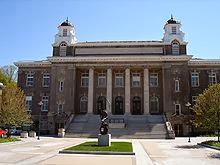
(Above is a picture of The Carnegie Library at Syracuse University)

Friday, November 22, 2013

Drive A Stake In The Ground

During the Land Rushes of the late 1800's, especially in places like Oklahoma, anxious settlers would line up at a specified place, at a specified time. When the signal was given ( often a cannon or rifle shot) they would rush into the unclaimed territory and stake their claim. The claims were determined by driving a stake into the ground. Many of the new land occupiers would immediately take decisive action and begin making modest improvements to the land to further establish their claim to ownership. The stakes that these settlers drove into the ground would often include their name and approximate location of the claim.

There comes a time in every analytical task that someone in charge has to say; "We are done with the exaustive analysis. The time has come for us to drive a stake into the ground and begin the work of making our plans work." Moving too fast can create issues but moving too slow can be even more destructive. "Sooners" were the settlers who would slip into the territory before the official start and stake their claim sooner, by bending the rules. The "Sooners" are still out there and if they get their idea staked sooner that you do yours, you will likely be in a reactionary posture.

The phenomon of a paralysis of analysis is as real as it gets. We can literally think a plan to death or think a plan to a status of stagnation which is really a death that has already taken place, but the realization has not yet been accepted. Thinking is good, thinking so much that you fail to take comittted action is not good. The very real possibility exist that if you wait too long, you will lose critical momentum.

You are going to feel a lot better once you make a decision after careful deliberation has taken place. Just like the people in the land rush who did not really know a great deal about the land they were claiming, they claimed it and then they made it work. Had they continued thinking and stayed at the start line when the signal was given to rush, the result would have been dramatically different.

There is safety in the multitude of counsel and therefore it is always a good idea to get the advice and opinion of others and then weigh the options. But after you have carefully considered the possibilities and then set your sight on the desired outcome, get in your horse drawn wagon and go drive a stake in the ground of the territory you have selected.  You will discover, that after the commitment is made and action is taken, you are going to find a way or make a way to get to where you want to go.

Thursday, November 14, 2013

It goes: Bang, beweekered and clampestuz.

"When I am driving about 38 miles per hour, it goes: "Bang, beweekered and clampestuz."

These are examples of the ridiculous and peculiar sounds we make as we are attempting to describe to the bewildered mechanic, the sound our car is making and therefore indicating to us, that something is terribly wrong. The description rarely helps the mechanic determine the source of the strange sounds and after they have given us their assurances, we leave our beloved vehicle, wondering what is wrong and how much it is going to cost us.

Sometime later we call to check the status only to be told that the mechanic road tested our car, at 38 miles per hour, and could not hear; "Bang, beweekered and clampestuz." Therefore they could not determine what was broken and since our car was not making any strange noises, we are free to come and get our vehicle.

This is an example that probably fits most of us when dealing with problems concerning our vehicles. Most of the mechanics I have dealt with are honorable and when they can't hear the strange noise they really can't fix the problem, because they cannot identify it.

All problems, big or small make noises, even though most of these noises are silent.  A great course of action is; when you hear the strange noise that a problem is making, identify and deal with it as soon as possible. Waiting to fix something that only occasionally makes a strange and disruptive "noise" is never a productive idea. Soliciting the help of others in identifying and correcting the problem is  very productive idea. Just because the problem is not screaming for help and others may not hear the troubling noise does not suggest that the problem does not exist or is is going to fix itself. Baby alligators can't inflict much damage, but you ignore a baby alligator and before you know it you are face to face with a full grown beast of a problem, that makes a lot of noise.

Problems unsolved cost money and compromise relationships the longer you wait to correct the problem the more it is going to cost in direct and indirect costs. Problems that are identified and dealt with quickly and resolutely give clarity to all involved. Don't dither, or wither, deliver!

Thursday, November 7, 2013

The Veteran I Knew Best

My Father served in World War Two. He was an Army Corporal assigned to the Coast Artillery Corps. He voluntarily enlisted May 7, 1942 and after basic training, was shipped to the Philippines. Shortly after arriving in the Philippines he was captured by the Japanese and served the remainder of the war in a Japanese prisoner of war camp. The camp he was held in was, Fukuoka called "Pines" by the prisoners because of a stand of pine trees in the camp and area.

My Father did not talk much about the time he was forced to spend in the prisoner of war camp, except to share a few rare glimpses into the daily lives of the prisoners. He talked about unbearable conditions, deplorable food supplies and the occasional eating of bugs to gain some badly needed nutrition. He did share the story about the day he arrived at camp and the day he was liberated.

ARRIVAL:
 He and other prisoners were lined up to face the commanding officer of the camp. The commanding Japanese officer held a rather large piece of bamboo in his hands. After looking each prisoner in the eyes, he then walked behind each of the prisoners and struck them, as hard as he could, in the back with the bamboo. He then walked around and again looked each of the prisoners in the eyes. Then he walked behind them and struck selected prisoners again! My Father was not struck again and he later learned that the Japanese officer struck only those prisoners the second time that had tears in their eyes.

LIBERATED:
On the day my Father and the other prisoners were liberated from Camp Fukuoka they took all of the Japanese soldiers who remained (many of the "brave Japanese" officers had already fled) and threw them in something he called "Honey-Pots." A "Honey-Pot" was a vessel that all of the prisoners human waste was deposited in. My Father laughed heartily when he shared this story.

My Father is The Veteran I Knew Best. He suffered many health problems as a result of his imprisonment but he never openly blamed the War, the Army or the Japanese. He was a proud solider and he served his country well. He volunteered to fight, to preserve freedom and The American Way and because it was; The Right Thing to do, he did it The Right Way, and when duty called he responded, Right Now. I am proud of his service to The United States of America and proud of all who serve and have served in our military to protect and preserve our freedom. My Father is The Veteran I Knew Best.

Our Veterans deserve our very best. They surely have earned our respect and our continued support.