Friday, June 14, 2013

Enough is Enough

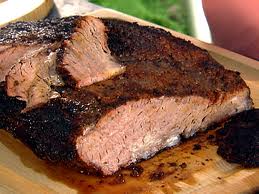
There is a world renown restaurant that cooks some of the best barbecue in a state that is known for great barbecue. Day in and day out this eatery serves hundreds of folks. Many of these folks are from far away places. They drive many miles to enjoy the food and the ambiance.

This restaurant has a great and very successful business model for, doing enough, to serve their patrons without doing too much. You see, this restaurant cooks a limited amount of barbecue on a daily basis. They open the doors at the same time every day and close the doors whenever they run out of barbecue! Some days they run out just after lunch and some days it takes a bit longer. They always run out before dinner time, but they always sell-out! This business has a fantastic brand and they protect it by doing enough for their customers but they do not clamor to do too much. They know the amount of business they can do, at a very high quality level,  on a consistent basis, so they build and plan their work around that manageable target.

There is a famous saying; "Don't bite off more than you can chew."

This is as true in life as it is in business. Far too often people get wrapped up in getting more and more, to the point of diminishing return. Some businesses are especially good at doing bad by
over-promising and under-delivering. They are so focused and geared on growing their business they literally run past the business they currently have and the business they can manage well. Enough is never enough.

You have no business getting bigger at anything that you cannot presently do so well, that the time it takes to achieve a high-quality desired outcome, is reduced because of your increased level of proficiency. "Enough" really is a finite place to be in business and it is a good place provided that you are not getting stagnant. This restaurant doesn't serve some good barbecue some of the time, it serves great barbecue all of the time. Growth is desired as long as it is not at the expense of quality.

Wednesday, June 5, 2013

Throw Up

The phone conversation began innocently enough. The caller had attracted my attention, minimally enough to lead to a computer aided presentation. We scheduled the web-based meeting and the call came in and I noted that it was just a few minutes late. Without any small talk, the presenter started delivering and after approximately one hour, they asked me how I felt about their services. Literally the presenter talked (seemingly without taking a breath) for over an hour, rattling off opportunity after opportunity. They threw up and the contents of the ranting came rather forcefully out of the phone and filled my office. A few of the 100,000 points they made during the never ending presentation did peak my interest and encompass some things that may hold potential for our company. However they still do not realize that since they never ask. The conversation was not a conversation at all, it was a auctioneer-paced dump of information the presenter had already labeled as important to me, as if I was just like everyone else. Even if I am like everyone else, I don't want to be treated that way.

Conversations are meant to be two way streets. When having a conversation make sure to include the other person by asking their thoughts as the conversation progresses. When you ask a question, remain silent and give the person the opportunity to think and respond. Don't interrupt as challenging as it may be to hold your tongue. Your goal is to team up, not throw up.

Friday, May 24, 2013

Watching, Always Watching

One fine day, a while back, I picked my six year old daughter from elementary school. She had no
sooner settled down into the passenger's seat, while buckling her seat belt, she looked at me and said; "You got a new key." In fact, I did have new key, but what made her observation so profound is that it was not an especially unique key. The new key looked just like most of the other keys on my keychain, of which there were at least eight.

The impact of my daughter's observation and calling-out of a very small detail had a lasting impact upon me. She noticed the really small things suggesting that she was all over the not-so-small things that I was doing. She was watching everything I did and I don't think she was especially unique in her behavior. Based upon that one event, my logical assumption was that other people I was around were also watching-EVERYTHING.

The hustle and bustle of life or conversely the doldrums of life can cause us to be so involved or uninvolved, to the extent, that we do not notice others observing and based upon their observations making judgements about us or learning from us. If we are busy and accomplishing things with a great attitude those around us will likely learn that they too can do the same. If we are slacking in our efforts and we have a bad attitude those watching us may feel that since we are behaving badly, without consequence, they too can behave badly without consequence. The behaviors, good and bad, may not be addressed by the folks we are working with, but they will have an impact on us internally, even though the impact may not be readily apparent. When you are engaged in doing good things, and doing them very well, there is something inside you that grows. When you don't do things well, the growth stops or retracts. Someone is always watching you, even if that someone is you.

Wednesday, May 1, 2013

The Most Important Opportunity


An astronomical water bill took me to city hall to inquire. The charge, for two consecutive months was off the chart. There is, of course, a window between me and the city employee and apparently that gives them a license to assume that I and practically everyone else that comes to the window, is well below average intelligence. Without the window as a barrier, they might need to prove that they care and respect the customers by, let's say, acting like we actually mattered and that we just might have a brain. The discussion of the huge charge for water lead to a rather lengthy and confusing explanation of the process of charging based on averages, etc. The lasting impression is that they really don't care because they don't have to. Where else can I go to get my water? They are not held accountable for treating the window-visitors as if: They represent the Most Important Opportunity. Because of the distressing issue I was having, the city employee could have started the monotonous detailed (I have done this a thousand times) explanation with; "I am sorry you are having a problem, let me see if I can help." But Noooooooooooooo. I got the standard "throw-up" and get away from the window as quickly as you can demeanor.

Whenever you are engaging with anyone in business you are given the opportunity to treat the individual(s) as: The Most Important Opportunity. Every individual thinks that their problem or situation is much more important that almost anything you have going on and they expect you to behave accordingly. They represent a chance for you to grow by taking ownership, learning what they need and then do what you can. The Most Important Opportunity of the day is often the one standing before you at any given time.  

Wednesday, April 17, 2013

Buy Good Junk

Buy good junk. What a marketing message. The seller makes no pretense as to what they are offering. They simply say that the junk they are selling is better than most other junk, so since you are likely to buy junk, you should buy good junk, not bad junk.

Don't try and make your offering look and feel like something it is not. There are times when we get something because the person we got it from made it out to be something it is not. 

Our emotions got the best of us and we created our own truth out of the misrepresentations that were emotionally presented.

The product or service you represent is not as much about the features and benefits as it is about how well you know the features and benefits and how accurately and comprehensively you represent them to the prospect.

There are many times when the prospects directs the process and moves relentlessly toward a lower price. They want what you have and the price is in their opinion far too high. 

If you have survived by representing your value proposition as bad junk and not good junk the price will remain the issue. So reducing the price of your bad junk is the only option you are left with. Anyone can do that.

Turn your junk into a high value offering by fully understanding, through the prospect's view, just how beneficial your offering is. When viewed from the client's perspective, your good junk takes on a whole new relative meaning. Your good junk becomes the solution to the problem and you can feel good about helping to solve it. Don't allow clients to buy bad junk, even if it is good junk. Help them to buy solutions.

Tuesday, April 9, 2013

Be Very Selective What You Value

What you assign value to and how much importance you assign to the values and how you adhere to those values, will define you. Being very selective as to what you value and how much you value, your values is one of the most critical decisions you will ever make. Values mean something. The value you place on things such as relationships and what it takes to build them cannot be overstated. The value you place on trust and commitment and persistence and clarity and transparency demonstrates to others what you stand for.

If value is placed on things that are not of the highest quality, the reasons for your being is deeply compromised. Compromise itself is a type of value. When you start compromising in order to achieve a specific result you dilute the merit of your position. Achieving a balance in relationships is admirable and typically is the best path to the mutually beneficial outcome. However, compromising can lead to circumventing the values that are so very important to your future and your outlook. Don't cut corners, but it is okay to drive quickly around some of them.

What do you consider to be your greatest value or values? When asking yourself this question consider how you view the people you deal with professionally and personally. How do they treat you and do you have any idea what they consider your values to be?

Gain a better perspective on your values by taking time and deep thought to list your values in order of importance. Here is a great place to start:

1. TRUSTWORTHY
( All relationships start and stop with Trust. If you can be trusted you can build a relationship. If you cannot be trusted, it matters not) 

2. DEPENDABLE
( One of the most valuable values is dependability. Will you do what you say you are going to do, at an acceptable level of quality, within the timeframe you have committed to? People love people that they can depend on. Life is easier to plan and predict if you are dependable and that means sharing immediately, if for some reason you cannot do that which you have promised to do)


3. DO THE RIGHT THING
( Take the High-Road. You can make a name for yourself by always taking the high road. Operating from this position eliminates any concerns that you may or may not behave in a manner that is trustworthy and dependable. )

You cannot be something you are not deeply committed to. Sooner or later your true self will shine fourth and when it does, your values will either shine brightly or so dimly that it is impossible to determine your intrinsic value.


Thursday, April 4, 2013

The Blip that needs "splainin"

North Korean Soldiers in "Camouflage" Huh?
Recently a major American auto manufacturer introduced, with great fanfare, a new iconic model that was intended to reestablish their brand. Their brand was started in 1917. After years of declining sales and a brand that suffered a muddled and eroding reputation the car company was ready to roll off the assembly line "The Car" that was going to change everything. Years and millions of research & and development and design dollars had been committed to this game-changer. The investment in terms of human hours and emotional commitment was enormous. The processes were in place the scheduling had been nailed down. Millions of dollars had been spent advertising the new car. Orders for the car had been placed and buyers were waiting for delivery.  Now all that the company had to do was deliver on the promises.

Unfortunately someone forgot to thoroughly check one of the most important parts of the plan.  The place where these cars were going to be assembled had, without any indication, failed to fully commit to the high quality demanded and expected and therefore did not deliver. The cars were coming off the assembly lines plagued with numerous manufacturing and assembly defects. Car after car rolled out of the plant and virtually none of them met the high standards that this luxury brand spent years building. The results were disastrous.

How many times are we faced with something really significant and throughout the process we are counting on others to come through so we assume and simply do not check on their commitment or abilities to ensure a successful outcome. Then when things start to go wrong we do not know which way to go or who we can help to change in order to turn things around. A discovery is made that since the people at fault did not take ownership and deliver, the break down in the process is revealed and it comes to light that the disaster is simply beyond belief. And more often than not, entirely preventable. Someone or a group of people were so myopic or complacent that no one saw the train or heard the warning whistle. The collision happened and people everywhere were now committing their valuable time to damage control. Looking at the end results, the mistakes were clearly evident. The question becomes: "How did so many big mistakes get by so many bright people and create an extremely costly comedy of errors." Answer the question, make the necessary changes and get on with correcting.